


Opening Note
These notes gather consequences that emerged from recent writing on black boxes, self-opacity, mediation, and the body as relay, together with the instrument forms those concerns began to generate. They do not restate the wider system from which they arose, but extract a narrower claim: that the self is better understood not as a hidden substance behind experience, but as a moving boundary condition shaped by awareness, memory, relation, suffering, and the limits of self-access.
This is a bridge-object: a compressed grammar for thinking through the boundary itself. The sections that follow are intentionally brief, accompanied where useful by minimal diagrams. Their aim is not to solve the black box, but to clarify the edge at which it becomes liveable.
I. The Moving Edge
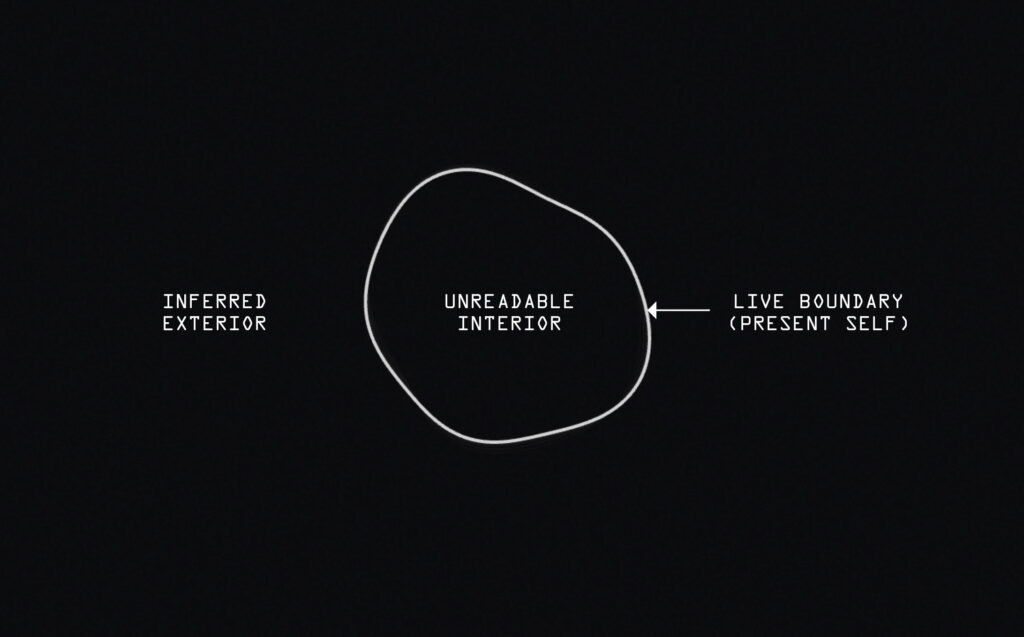
The self is usually imagined as something hidden behind experience: a mind inside a body, looking out at a world. This picture is intuitive, almost automatic, and probably wrong. It treats selfhood as a concealed occupant, a private substance tucked behind sensation, language, and action. But what if the self is not behind the line at all? What if the line is the self?
This changes the geometry of the problem. The question is no longer how to reach the hidden occupant, but how to understand the boundary at which unreadable interior and inferred exterior meet. We do not encounter ourselves as finished objects. We encounter stress, continuity, memory, perturbation, bodily relay, and the unresolvable fact of being both within and at the limit of experience. The self appears less as a thing than as a condition of relation.
A boundary is not merely a wall. It is an active site: a place where difference is maintained, where signal arrives, where pressure leaves marks, where one domain becomes thinkable against another. If the self is boundary rather than occupant, then selfhood is neither pure interior nor pure exterior. It is the moving edge along which each is continually inferred.
The self, under this view, is not what hides behind experience. It is what happens at its live perimeter.
II. Awareness as Light
Awareness is not a lamp turned upon a finished world. It is the structuring light through which latent potential takes coherent form as experience. Awareness does not merely reveal what is already there; it participates in the formation of what can appear at all. What we call a stable world is therefore less a pre-existing object than a participatory event at the edge of awareness.
Light is a useful figure here not because awareness is literally optical, but because the analogy cuts close. Light differentiates. It renders. It sharpens one thing against another. Awareness seems to do something similar: not by creating reality from nothing, but by structuring latent possibility into usable, lived form. The world that appears is neither arbitrary nor wholly independent. It is shaped through contact between awareness and what exceeds it.
This matters because it prevents two equal mistakes. On one side lies naïve realism, which treats the world as simply there, waiting to be copied inward. On the other lies the fantasy that awareness invents everything in a solipsistic void. A boundary metaphysics requires neither. Instead, awareness acts at the threshold where latent potential becomes lived coherence.
To say awareness is light is therefore not to say it passively illuminates a finished scene. It is to say that experience is inseparable from the structuring activity by which something comes to appear.
iii. Memory as Residue
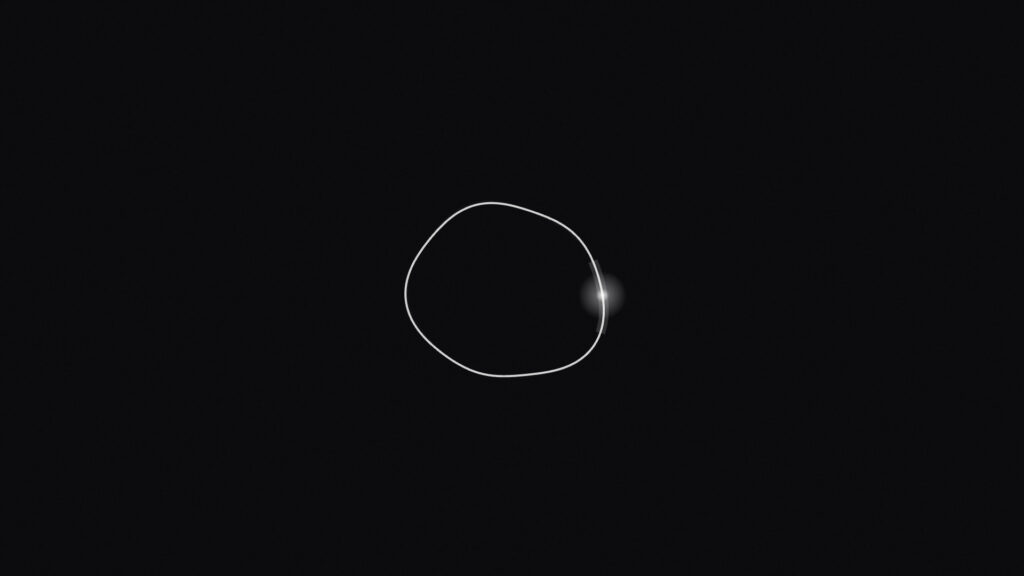
Memory is not an internal archive of fully stored scenes waiting to be retrieved. It is the persisting residue and afterimage of prior states retained along a continuing edge of awareness. The past remains not as sealed content, but as stress, trace, and ghosted persistence at the boundary of the present.
This changes the usual picture of memory. Instead of imagining a cabinet of preserved moments somewhere “inside,” we can think in terms of imprint. Pressure leaves marks. Repeated states thicken pathways. Previous forms do not vanish cleanly; they linger as weighting, tendency, atmosphere, distortion. What returns in memory is often less a pure replay than the continuing activity of what has not fully decayed.
This is why afterimage is a useful analogue. When something bright is seen, it often remains for a moment after it is gone: not as the thing itself, but as fading persistence. Memory may work similarly. The past is not present as intact content, yet it continues exerting force. It shapes the present from the edge, not from a hidden vault.
Such a model also fits lived experience better. We do not recall ourselves by opening a file. We carry sediment. We inherit stress from prior states. We are, in part, formed by what continues to cling to the boundary of the now.
Memory, then, is not storage. It is the present still bearing the marks of where it has been.
IV. Relation as Perturbation
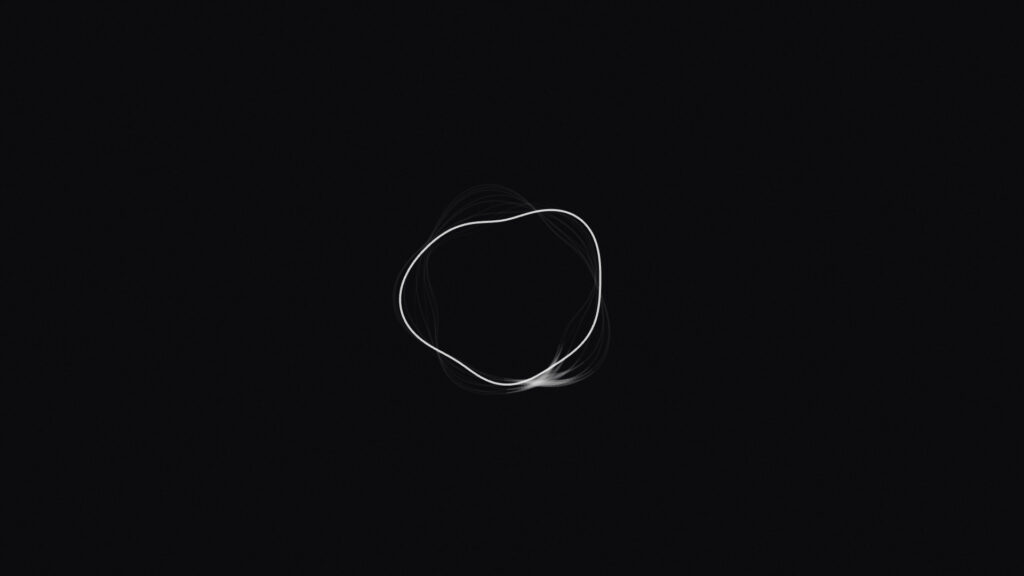
Other minds do not become available to us through direct access, but through perturbation: expression, delay, warmth, distortion, contact, withdrawal. Relation happens not through possession of the other’s interior, but through the way one boundary deforms another. Intersubjectivity is therefore less like transparency and more like resonance.
This matters because relation is often imagined through a fantasy of eventual access. If only we knew enough, listened well enough, loved well enough, or measured deeply enough, perhaps the other would finally become transparent. But relation does not abolish opacity. It takes place through it. The other remains inaccessible in the strongest sense, and yet relation is still real.
What we encounter is not interior possession but boundary-effect. Tone alters us. Delay unsettles us. Warmth stabilises us. Absence changes the field. Another person is registered not as a direct object of inner certainty, but through their perturbations of our own perimeter. The meeting of selves is not the collapse of two interiors into one. It is the ongoing deformation each boundary induces in the other.
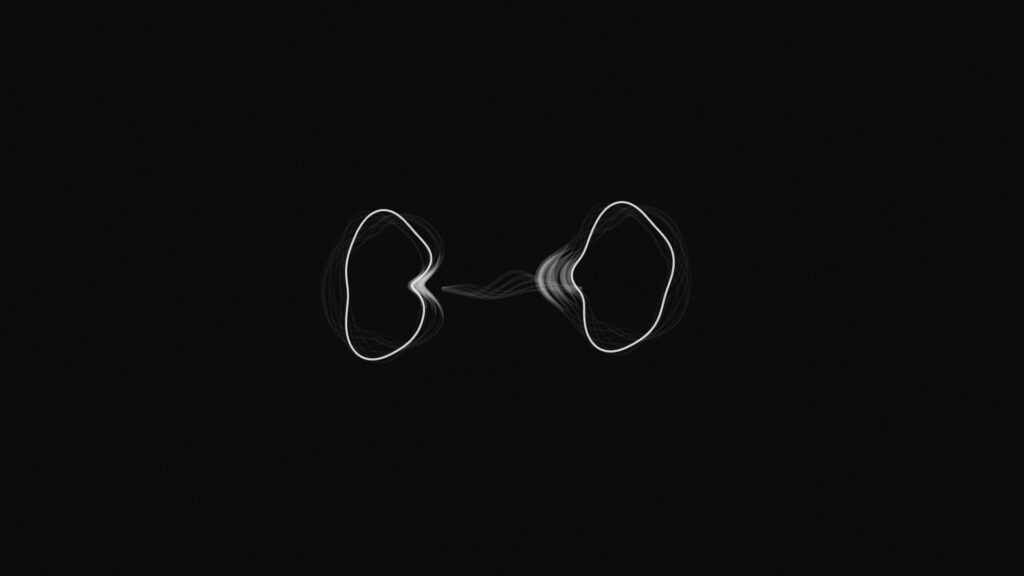
This is why resonance is a better model than transparency. Resonance does not require total access. It requires attunement, interference, amplification, and shared vibration across distance. One thing moves, and another responds, without either becoming the other.
Relation, then, is not the abolition of the black box. It is what happens when black boxes touch without surrendering their irreducible interiority.
V. Limbo as Clue
To live in limbo — between deaf and hearing, between inside and outside, between one framework and another — may be more than a biographical inconvenience. It may reveal something structural about awareness itself: that it is always boundary-dwelling, never fully at home in one side alone. Limbo, in this sense, becomes not just a condition of exclusion, but a clue to ontology.
What appears personally awkward or socially unresolved may also be philosophically instructive. To inhabit an in-between state is to become unusually sensitive to mediation, translation, partial access, and the failure of clean categories. One begins to notice that many of the binaries other people treat as stable — hearing/deaf, body/world, self/other, interior/exterior — are lived less as fixed territories than as negotiated edges.
This is why limbo matters here. It offers phenomenological evidence for the larger claim. If awareness were securely located on one side of experience, limbo would be an error condition: a failure to occupy the correct domain. But if awareness is itself boundary-dwelling, then limbo is not aberration so much as exposure. It reveals what is usually concealed by smoother functioning: that selfhood is lived at a threshold.
Limbo is not comfortable. That is part of its force. It refuses easy settlement. But in doing so it reveals that perhaps settlement was never the truth of the matter. Awareness does not stand fully inside one world looking out at another. It inhabits the edge where worlds fail to close cleanly over one another.
Limbo is not just a personal state. It is ontological evidence for the boundary thesis itself.
VI. Suffering as Contour
Suffering is often treated as an unfortunate excess imposed upon an otherwise intact self. It may instead be the resisting pressure through which the boundary acquires contour, differentiation, memory, and depth. Without friction there may be only untested potential.
This does not romanticise pain, nor imply that all suffering is noble. It simply asks whether form itself may require resistance. A perfectly frictionless existence would contain no pressure, no interruption, no forcing of shape. Nothing would push back hard enough for contour to emerge. Suffering, in this structural sense, is not an ornament laid atop selfhood. It is one of the ways the self becomes distinct.
Pressure deepens the line. It leaves trace. It differentiates before and after. It creates the conditions under which memory matters and response becomes necessary. A life without any resisting force might remain possible in theory, but it would risk remaining unformed — all capacity, no edge.
This is why suffering and depth are so often entangled. Not because pain is inherently meaningful, but because resistance generates structure. Under pressure, a boundary learns its limits, acquires density, and retains marks. The same self that would prefer not to suffer may nevertheless owe much of its contour to what has impinged upon it.
A boundary metaphysics therefore treats suffering not first as moral punishment or cosmic mistake, but as one of the pressures through which selfhood becomes more than undifferentiated possibility. It is the force that gives the line some of its shape.
VII. Dissolution as Loss of Coherence
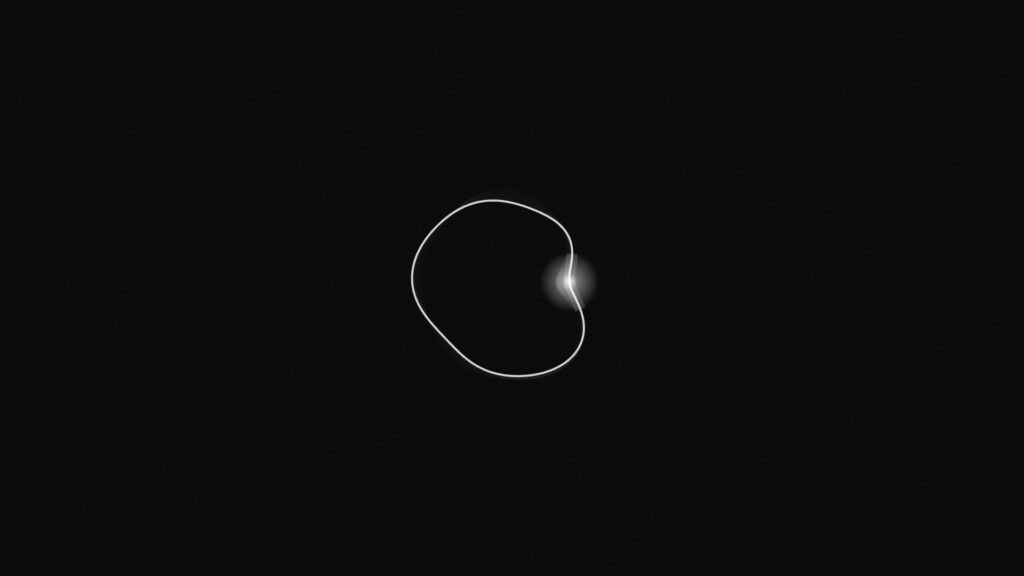
Dissolution need not mean extinction. It can be the gradual loosening of local coherence — the boundary dimming, dispersing, or relaxing back toward the broader field, source, or unstructured potential that subtends it.
This matters because modern thought often imagines only two options: stable selfhood or total annihilation. But many experiences suggest more nuanced transitions. Sleep, fatigue, grief, ego-loss, intense absorption, meditative suspension, and certain altered states all involve some softening of the usual boundary. The line does not necessarily vanish. It loosens. Its local coherence weakens. Its capacity to hold itself in sharp distinction begins to flicker.
This suggests that selfhood is less a static fact than a maintained pattern. A boundary persists only so long as certain structuring conditions hold. When those conditions relax, the self may not be destroyed so much as diffused. What returns to the broader field is not nothing, but less bounded coherence.
Such a view also changes how dissolution is valued. Instead of reading every loosening as catastrophe, one can ask what mode of existence is taking shape when local contour is no longer strongly held. Some dissolutions are frightening because they threaten identity. Others are restful because they relieve the burden of maintaining it. In both cases, what is at stake is coherence, not simple being-versus-nonbeing.
Dissolution, then, names a boundary entering a different condition: less sharply held, less individuated, and perhaps closer to the field from which its temporary stability arose.
VIII. The Body as Relay
The body is not a transparent vessel through which a hidden self peers outward. It is a relay: a site where signal is routed, stabilised, transformed, delayed, and carried. If the body is relay rather than container, then selfhood appears less as an object within it than as a condition generated at its edge.
The word matters because it avoids two familiar mistakes. The first is the fantasy of a ghostly inner subject piloting the body from behind the controls. The second is the flattening reduction that treats the body as fully available mechanism, as though enough measurement would simply yield the self. Relay resists both. A relay is neither pure source nor pure destination. It is a crossing point in which transmission is mediated.
This fits lived experience more closely. Perception arrives through routed systems. Hearing is filtered, delayed, reconstructed. Touch becomes meaningful through translation. Bodily life is not immediate transparency but structured passage. The body is intimate precisely because it is the medium through which experience arrives, yet it never becomes fully objectifiable from within that arrival.
If the body is relay, then the self is not best imagined as something sealed inside it. Rather, selfhood emerges at the relay’s active edge, where signal becomes world, where world becomes sensation, and where mediation becomes the condition of presence.
The body does not hide the self behind it. It is one of the ways the boundary holds.
The boundary metaphysics proposed here does not remain purely conceptual; it has also begun to generate instrument forms that stage correlate, perturbation, residue, and sealed interior without pretending to overcome opacity.
IX. Boundary Output
An instrument that stages correlate without disclosure.
Boundary Output demonstrates that a sealed interior can still generate stable, measurable public traces. Correlates are not confessions; telemetry is not testimony. What appears at the surface is meaningful without becoming revelation, allowing the boundary to speak in patterns while the interior remains unavailable.
This distinction is philosophically useful because it preserves both structure and opacity. Too often the desire for knowledge collapses into the desire for interior access: if a pattern is stable enough, perhaps it must disclose the thing itself. Boundary Output resists that inference. It shows how disturbance at the edge can be legible, repeatable, even instrumented, without implying that the inside has ceased to be sealed.
The analogy to consciousness is obvious enough to be useful. Neural correlates may map an episode without becoming the episode. Behaviour, speech, and measurable traces may strongly indicate inner life without granting possession of it. The boundary can be active, expressive, and public while the interior remains inaccessible in principle.
That is what Boundary Output stages. Not an opening of the black box, but a disciplined account of what the black box does at its edge when coupled to a measurable world. The instrument matters because it formalises a crucial rule: the boundary may become articulate in pattern without ever becoming transparent in content.
What it gives is not disclosure. It gives correlate.
X. Boundary String
An instrument that stages perturbation, residue, and not-knowing at the edge.
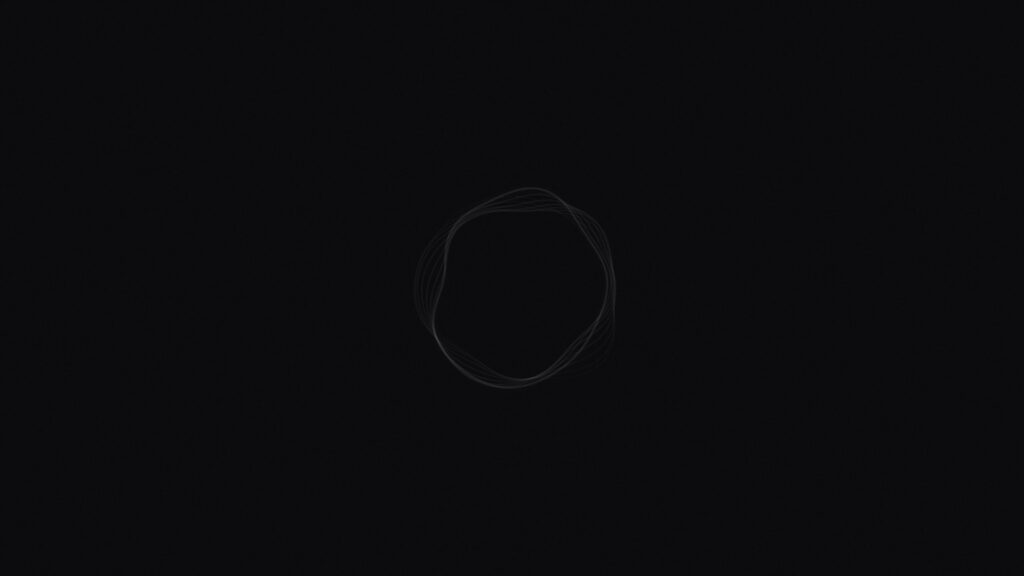
Boundary String reduces the logic to its minimal visible form: a sealed, deforming, memory-bearing line under pressure. It does not open the interior or translate experience into image. It stages perturbation, ghosting, and retained stress — a diagram of not-knowing rather than its resolution.
Its value lies in its restraint. Instead of offering symbolic illustration, it gives a minimal ontological figure: a boundary that twists, smears, holds afterimage, and remains sealed. What matters is not what lies “inside,” nor any attempt to decode content, but the way pressure acts on the perimeter and leaves traces there.
This is why the instrument feels closer to a thought experiment than a conventional visualiser. It does not say: here is what the inner state means. It says: here is what a live boundary looks like when acted upon without being crossed. The resulting image — ghosted, stressed, still coherent — makes visible a condition that is otherwise difficult to think cleanly: not-knowing that is nevertheless structured.
Boundary String therefore matters not only as a tool but as a diagram. It compresses the wider framework into one minimal event: a line that deforms, remembers, and never fully yields its interior. In that sense, it is less representation than enactment.
It shows the boundary thinking itself as edge.
XI. Coda
We are not minds inside bodies looking out at a world. We are moving boundary conditions shaped by residue, relation, resistance, and the permanent limits of self-access. The body relays. Memory lingers. Suffering contours. Relation perturbs. Awareness never fully becomes an object to itself. What remains is not a hidden occupant, but a living edge.
This inversion matters because it changes the problem from the ground up. If the self is treated as hidden occupant, philosophy becomes a search for interior access and certainty. If the self is boundary, philosophy becomes a study of edge-conditions: structuring light, retained residue, mediated signal, resisting pressure, and the impossibility of zero-distance self-knowledge.
Such a view does not solve the black box. It does something more modest and perhaps more honest. It relocates us. The self is no longer imagined as a secret chamber awaiting disclosure, but as a line of active relation where inside and outside become thinkable without ever becoming fully available. We do not transcend mediation. We live within it.
That is why boundary matters. Not as wall, but as site. Not as barrier to truth, but as the condition under which any truth becomes liveable.
What remains is not the fantasy of final access.
It is the moving edge itself.
Sequence note:
These essays form a connected sequence on black boxes, selfhood, mediation, and ontological limits. Together they move from the problem of AI systems we cannot define, to the self’s failure of full self-access, to the body as relay rather than transparent vessel, and then to the self as a moving boundary condition rather than a hidden interior. The Moving Edge gathers those consequences into a compressed grammar: a bridge-object on awareness, memory, relation, suffering, dissolution, and the boundary as the liveable site of selfhood.
Read in sequence:


Leave a Reply