

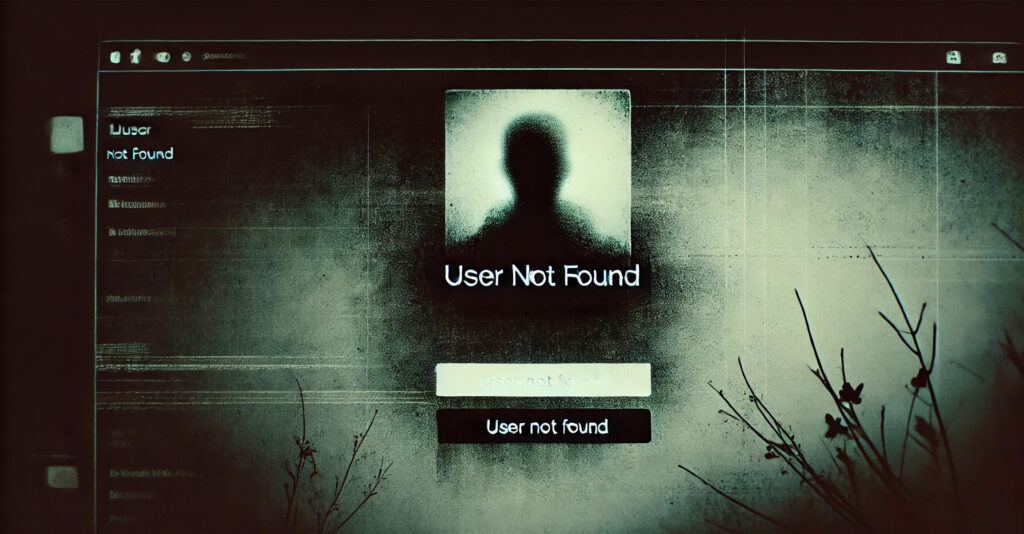
A Digital Descent into Oblivion
Stories that explore death, identity, and reality as a simulation often rely on expansive narratives, but User Not Found distills these themes into an unsettling, five-minute cinematic experience. Originally conceived as The Forbidden Update, the screenplay evolved beyond its prose counterpart, refining its metaphysical horror while embracing the stark inevitability of transition.
A seemingly innocuous computer update request serves as the catalyst for protagonist Lucy Ward’s irreversible erasure. What begins as tech-related frustration rapidly mutates into an existential crisis, where she discovers reality itself is a fragile system—one that can be modified, but never truly escaped.
From The Forbidden Update to User Not Found
The shift in title wasn’t just cosmetic. User Not Found better encapsulates the final horror Lucy faces. The term, commonly seen in tech error messages, takes on a deeply personal, existential meaning: when she is erased, she is neither deceased nor reborn—she simply ceases to exist within any known framework.
This change also aligns with the screenplay’s tight, minimalist approach, where every line, every visual detail serves a thematic purpose. With only three spoken lines and one internal monologue, the weight of the story lies in its atmosphere, digital dread, and the inevitable loss of self.
The Power of Minimal Dialogue
Lucy speaks only three times, each line marking a step deeper into the void:
- “What the hell?” – A knee-jerk reaction to an anomaly (Hell).
- “What is this?” – An existential realisation, the first sign of true questioning (Limbo).
- “Dear God.” – The moment of final recognition, a whisper on the edge of oblivion (Heaven).
Her only voice-over thought—
“I wonder…”
—bridges the gap between curiosity and cosmic horror, an internal reflection that suggests the observer effect may be at play. Is she changing reality by observing it, or was she always meant to uncover its fragility?
Visual and Conceptual Horror: A Reality That Glitches
Unlike traditional horror, which relies on external threats, User Not Found generates terror through a creeping sense of unreality. The glitching environment—manifested in:
- Pulsing system folders that “want” to be seen.
- The distortion of physical space after modifying the Planck Length.
- A computer UI that is not just an interface, but a gateway to existential erasure.
These elements reinforce the notion that Lucy is not merely interacting with a program—she is trespassing on the fundamental framework of existence itself.
The Final Message: An Invitation to Continue?
The story’s conclusion delivers a cold and impersonal confirmation of Lucy’s non-existence:
LUCY WARD: USER NOT RECOGNISED.
Followed by an even more chilling instruction:
USER NOT FOUND, PLEASE REGISTER TO CONTINUE.
Unlike a definitive death, this suggests a transition, but to what? Has Lucy been fully erased, or is she about to be repurposed into something beyond human comprehension? The ambiguity lingers, much like the best existential horror—it doesn’t provide answers, only an eerie sense that something else is waiting.
A 5-Minute Short That Leaves a Lasting Impression
With a runtime of approximately five minutes, User Not Found is a contained yet profound cinematic experience. Every element—from the eerie silence of the UI to the final flicker of the screen—works in unison to create a meditative yet horrifying glimpse into technological oblivion.
Much like its protagonist, the viewer is left staring into the void of the screen, questioning:
Are we using the system, or is it using us?
Adapting to a 3-Minute Format:
In an effort to explore different narrative structures and meet specific competition criteria, User Not Found was meticulously condensed into a three minute version. This adaptation required a careful balance between maintaining the core existential themes and ensuring the story’s impact within a shorter runtime. The process involved tightening the pacing, focusing on essential plot points, and preserving the haunting atmosphere that defines the original piece. This shorter rendition offers a more immediate experience of Lucy’s unsettling journey, providing a different yet compelling perspective on the narrative.


Leave a Reply