

sequence = [0, 1]

for i in range(2, n):
    sequence.append(sequence[i-1] + sequence[i-2])

if (life == complex) and (growth == nonlinear):
    find_pattern(sequence)
    interpret(sequence as metaphor)
Mathematics has long been regarded as a universal language—one that governs everything from the movement of galaxies to the growth of plants. One of the most fascinating and visually captivating mathematical patterns is the Fibonacci sequence, a series of numbers that frequently appears in nature, art, and design. But beyond its numerical beauty, the Fibonacci sequence has evolved into something much deeper—a metaphor for life, growth, and the interconnectedness of the universe. In this article, we explore the Fibonacci sequence as more than just a mathematical curiosity, diving into its philosophical, symbolic, and metaphoric significance in human experience.
The Fibonacci Sequence: A Brief Overview
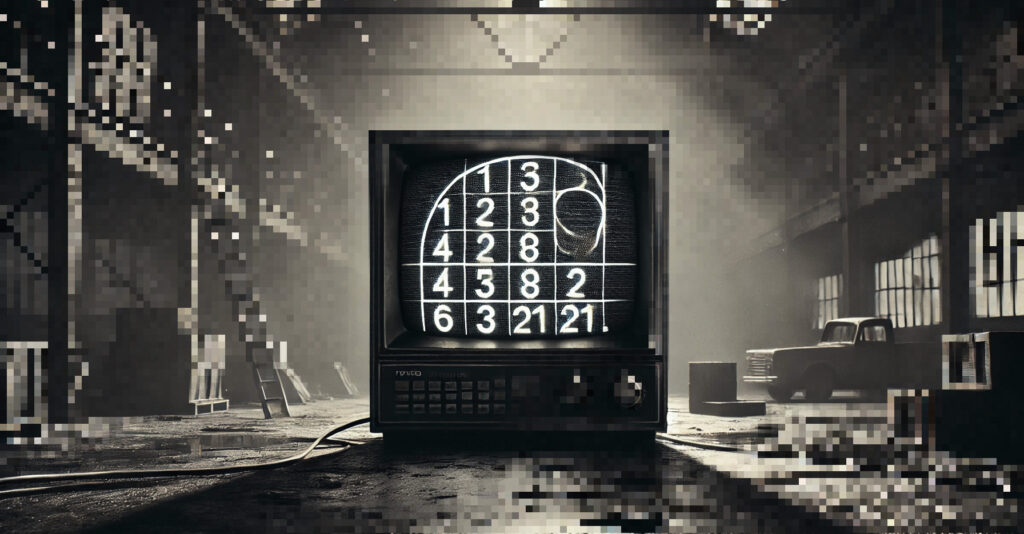
The Fibonacci sequence is a simple yet elegant pattern where each number is the sum of the two preceding ones: 0, 1, 1, 2, 3, 5, 8, 13, 21, and so on. Discovered (or rather popularised) by the Italian mathematician Leonardo of Pisa, also known as Fibonacci, this sequence reflects the way certain natural processes unfold. The sequence can be found in the arrangement of leaves on plants, the spiral of seashells, the branching of trees, and even in the proportions of human bodies.
The golden ratio, closely related to the Fibonacci sequence, also plays a significant role in nature and art, often associated with beauty and harmony. The ratio between consecutive Fibonacci numbers approaches the golden ratio as the numbers increase, linking these two concepts in both mathematical precision and aesthetic appeal.
But beyond its mathematical origins, the Fibonacci sequence has been adopted as a metaphor for growth, balance, and the nature of reality itself.
Mathematics as Metaphor: Finding Patterns in Life
The Fibonacci sequence serves as a powerful metaphor for the way life unfolds, often in unexpected yet consistent patterns. Just as the sequence builds on itself, so too does life. Every step we take is shaped by the actions that preceded it, yet it always opens up new possibilities for future growth. The sequence reflects the interconnectedness of life—how small, seemingly insignificant events can build into something far greater over time.
This idea is particularly potent when applied to personal growth. The Fibonacci sequence reminds us that progress is not always linear—sometimes we take small steps (the “1, 1”), and other times we experience more significant growth (the “8, 13, 21”). Just as in nature, where growth follows these patterns, so too do our lives evolve in ways that often mirror the Fibonacci sequence’s steady, incremental progress.
In this way, mathematics transforms into metaphor, reflecting how growth and change are not random but part of an inherent pattern that can be seen across the universe.
The Spiral of Life: A Cosmic Connection
One of the most striking representations of the Fibonacci sequence is the spiral. This shape, which appears in everything from galaxies to nautilus shells, symbolises expansion, continuity, and the infinite unfolding of existence. The spiral, derived from the Fibonacci sequence, suggests that life itself is a series of ever-widening circles, constantly growing and evolving while maintaining an underlying order.
The Fibonacci spiral is often used to symbolise spiritual growth, the idea that human consciousness expands in ever-widening circles of awareness. As we grow, we don’t move in a straight line; instead, we spiral outward, revisiting familiar themes and experiences from new perspectives, each time gaining a deeper understanding of ourselves and the world around us.
This spiral can be seen not just as a metaphor for personal development but also as a reflection of the cyclical nature of life. We return to the same points in life, much like the sequence, only to find that we are further along in our journey, seeing things with a new understanding.
The Fibonacci Cipher: Unlocking Hidden Meanings
The idea of a cipher is often associated with hidden codes or secret messages. When we think of the Fibonacci sequence as a cipher, it invites us to look deeper into how numbers and patterns can reveal something about the fundamental nature of reality. Could the Fibonacci sequence be more than just a mathematical curiosity? Could it be a code embedded in the fabric of the universe, hinting at a deeper order that governs not just numbers but life itself?
When we consider the sequence as a metaphorical cipher, it suggests that there may be hidden patterns within the chaos of life—guiding principles that, though unseen, shape the unfolding of events. The Fibonacci sequence serves as a reminder that while life may appear random, there is often a structure hidden beneath the surface, just waiting to be uncovered.
In literature, art, and philosophy, many have used the Fibonacci sequence to suggest that the universe is governed by an unseen code—an algorithm of sorts—that connects all things. Whether it’s the growth of plants, the formation of galaxies, or the trajectory of human life, the Fibonacci sequence could be seen as the key to understanding the interconnectedness of everything.
Mathematics and Mysticism: The Universal Code
Throughout history, mathematicians and philosophers alike have pondered whether the universe is built on a code. From Pythagoras to modern-day scientists, many have searched for universal laws that explain the cosmos. The Fibonacci sequence offers a tantalising glimpse into how math and mysticism might converge, revealing a universal order that lies beneath the surface of reality.
In sacred geometry, the Fibonacci sequence and golden ratio are often used to symbolise divine proportions and the harmonious balance of the universe. These patterns can be found in ancient architecture, religious symbols, and even in the composition of musical scales, suggesting that there is a universal design encoded in the very structure of reality.
Could the Fibonacci sequence be part of this universal code? While we may never fully decode the mysteries of existence, the presence of this sequence in so many aspects of life hints that mathematics may be more than a tool for measuring the universe—it may be the very language that the universe speaks.
The Fibonacci Sequence in Art, Nature, and Design
The application of the Fibonacci sequence is not limited to nature and mathematics—it extends into the realms of art, architecture, and design. From the proportions of the Parthenon in ancient Greece to the spirals in Leonardo da Vinci’s works, the golden ratio, closely tied to the Fibonacci sequence, has been used to create aesthetically pleasing compositions.
In nature, the sequence appears in the branching of trees, the arrangement of leaves on a stem, and the structure of flowers. This natural occurrence suggests that the Fibonacci sequence is more than just a mathematical abstraction—it is woven into the very fabric of life.
In modern times, artists and designers continue to use the Fibonacci sequence as a guiding principle in their work, creating pieces that reflect the harmony and balance found in nature. The sequence is not just an aesthetic choice—it represents a deeper connection to the natural world, a way of tapping into the same patterns that shape the universe.
The Fibonacci Cipher as a Metaphor for Meaning
Ultimately, the Fibonacci sequence is more than just a mathematical pattern—it is a powerful metaphor for the way life unfolds, grows, and connects. It speaks to the cyclical nature of existence, the idea that progress is not linear but builds on itself in complex, often unexpected ways.
By viewing the Fibonacci sequence as a cipher—a key to unlocking hidden meanings in the world—we are reminded that life itself is full of patterns and rhythms, some of which are visible, others of which are hidden. Whether in nature, art, or personal growth, the Fibonacci sequence offers us a lens through which to understand the deeper, often invisible connections that shape our world.
Conclusion: Decoding Life’s Patterns
The Fibonacci sequence may have started as a simple mathematical curiosity, but it has evolved into something much more—a cipher that reveals the hidden patterns of life, growth, and connection. From the spiral of galaxies to the rhythm of human development, the Fibonacci sequence serves as a reminder that even the most complex and chaotic aspects of existence often follow a beautiful, underlying order.
In the end, the Fibonacci sequence is not just about numbers—it is about finding meaning in the patterns of life. Whether we view it as a mathematical truth or a metaphor for existence, the Fibonacci cipher invites us to look deeper, to see the interconnectedness of all things, and to embrace the mystery and beauty of the world around us.


Leave a Reply