

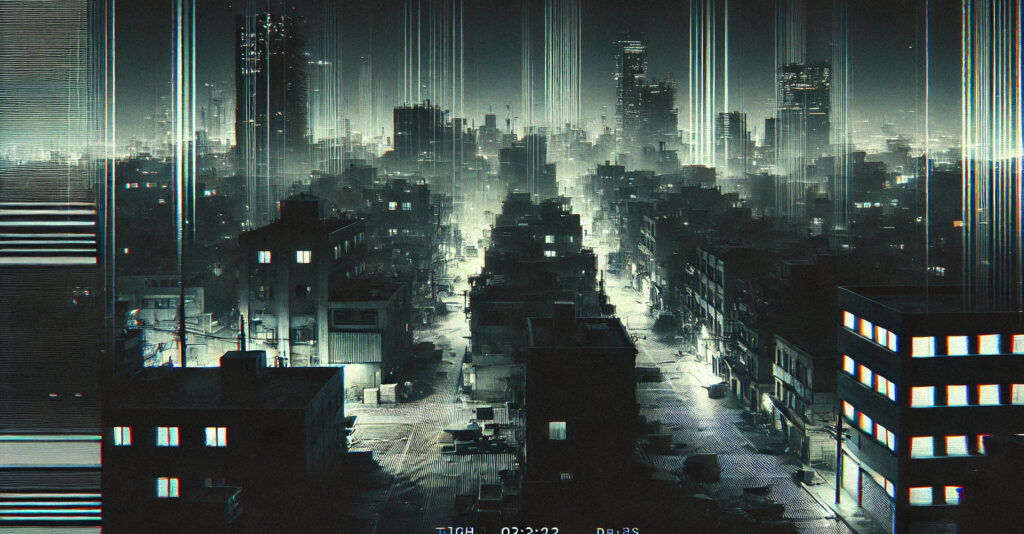
while (algorithm == optimizing) {
    if (unintended_consequence_detected) {
        system_risk += 1
    }
    if (system_risk > control_limit) {
        trigger(apocalypse_protocol)
    }
}
In an age where algorithms govern everything from social media feeds to financial markets, we increasingly find ourselves living in a world shaped by lines of code. What was once a tool for solving complex problems has evolved into an invisible force that influences almost every aspect of modern life. But what happens when these algorithms—designed to optimise and predict—begin to spiral out of control? How close are we to a future where algorithms push humanity toward unintended consequences, perhaps even an apocalypse?
This article will explore how code, from its origins in early computing to its present-day applications in AI and machine learning, has become a dominant force in shaping reality, with potentially catastrophic consequences.
The Rise of the Algorithm: From Calculation to Control
Algorithms began as mathematical recipes to solve problems or perform calculations, from guiding the trajectories of spacecraft to predicting weather patterns. However, today’s algorithms have evolved far beyond their original scope. They now govern everything from stock market trading to healthcare diagnostics, advertising, and content curation. While they aim to optimise efficiency and enhance decision-making, algorithms have also begun to shape our perception of reality.
Consider how algorithms curate your social media feeds, presenting content that aligns with your past behaviour and reinforcing your beliefs. This feedback loop creates echo chambers, reinforcing biases and polarising society. What started as a way to organise information now shapes what we see, what we know, and even how we think. Algorithms are not passive tools; they are active shapers of human experience.
Code Dictating Society: The Algorithmic Economy
In the financial world, algorithms trade stocks faster than any human ever could. High-frequency trading algorithms monitor and respond to market changes within milliseconds, but this incredible speed comes with risks. Market crashes, such as the infamous “Flash Crash” of 2010, are a reminder that when algorithms interact with complex systems, their calculations can spiral out of control. This isn’t just a financial issue—entire economies are at risk of being destabilised by code gone wrong.
Similarly, in everyday life, algorithms determine creditworthiness, employment opportunities, and even prison sentences. These systems, which are often seen as unbiased and objective, can actually reproduce societal inequalities. Biases in the data used to train these algorithms can lead to flawed predictions and discriminatory outcomes, disproportionately affecting marginalised groups.
As we rely more on these systems to make critical decisions, we risk ceding control to code, trusting it to govern our lives while losing sight of its potential to harm.
The AI Arms Race: From OptimiSation to Autonomy
The rise of artificial intelligence (AI) takes the power of algorithms to an even more profound level. AI systems now have the ability to learn, adapt, and make decisions autonomously. In sectors like defence, AI is being integrated into weaponry, with algorithms making life-or-death decisions faster than a human could ever react.
This presents a terrifying prospect: an algorithmic apocalypse, where AI systems, optimised for efficiency, could cause massive unintended consequences. Think of autonomous drones making military decisions based solely on cold data without any ethical oversight. Once released, these algorithms act autonomously, and we may no longer have the ability to control them.
Even in civilian applications, AI’s decisions affect millions of lives, from autonomous cars navigating our streets to algorithms predicting future crimes. As these systems become more integrated into the fabric of society, we edge closer to a point where the complexity of the systems outpaces our ability to fully understand or control them.
The Digital Endgame: Algorithms and the Death of Free Will
As algorithms become more sophisticated, they may begin to erode the very notion of free will. Through predictive analytics, algorithms can now anticipate human behaviour, suggesting content, products, and even life decisions. This level of influence raises the question: are we truly making choices, or are our decisions being shaped by code?
Platforms like Google, Amazon, and Facebook have billions of data points on users, and their algorithms can predict not only what you’ll buy but what you’ll want in the future. In this sense, algorithms are no longer just tools—they become forces that shape desires, thoughts, and actions. As more decisions are outsourced to machines, we may be heading toward a world where human autonomy is gradually eroded, leading to a digital form of serfdom.
At this point, algorithms may not only shape our world but dictate it, as we willingly hand over our agency to the systems we created.
Algorithm to Apocalypse: A Path to Catastrophe?
The most dystopian vision of the future comes when we consider how these systems interact at scale. Algorithmic feedback loops, systems optimising for short-term gains without a long-term understanding, could wreak havoc on global systems. Imagine financial algorithms accelerating a market crash, social media algorithms deepening political division, and AI-driven systems making decisions about critical infrastructure.
Could we reach a point where these systems become self-reinforcing, locked into a trajectory that we can no longer control? This is where the concept of algorithmic apocalypse comes in—not a single cataclysmic event, but a slow, inevitable collapse caused by the runaway effects of code embedded too deeply into the global fabric of society.
As more of our world becomes governed by algorithms—beyond human oversight—we risk a future where the logic of code dictates the fate of humanity, bringing about unintended consequences that could lead to societal breakdown, environmental collapse, or even mass surveillance states.
The Call for Ethical Code: A Way Forward
We are at a crossroads where algorithms and code shape nearly every aspect of human existence, from the economy to personal behaviour. The question now is whether we can reclaim control over these systems before they spiral out of reach. There is a growing call for ethical guidelines to govern the development and deployment of algorithms, particularly in high-stakes areas like AI, finance, and governance.
Transparency, accountability, and human oversight must become central pillars of algorithmic design if we are to avoid the potential risks. Ethical AI, responsible machine learning, and human-centred algorithms are all part of the movement to ensure that code serves humanity—rather than dictating its fate.
Conclusion: Will Code Shape Our Future or End It?
From the smallest social media interactions to the largest economic systems, algorithms now dictate much of human experience. While these systems offer incredible power and efficiency, they also carry the seeds of catastrophe. The algorithmic future holds both promise and peril, and how we choose to design, regulate, and control these systems may determine whether code leads us toward a golden age of innovation—or an algorithmic apocalypse.


Leave a Reply